
How After-Hours Care Impacts the Caregiver Experience
Nurse triage can help soothe family members & avoid hospitalization
Editor’s note: This is the second of a three-part series. Read the first article here.
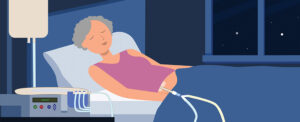
When a daughter is sitting beside her father’s hospital bed in the living room at 11:47 p.m. and his breathing changes, she feels panic. She doesn’t know if this is the moment she’s been told to expect or if it’s something a small adjustment can ease, so she picks up the phone.
What happens over the next few minutes shapes everything that follows, both clinically and emotionally. Her experience will differ dramatically depending on whether she reaches a nurse who knows her father’s chart or an answering service who takes a message. The next few minutes determine whether she feels heard and supported in a moment when she is alone and scared.
In my first article in this series, I looked at the operational case for nurse-first triage and how it helps organizations of every size scale care, control costs, and leverage data to improve care. But operations are only one side of the story. The other is the person on the phone at 11:47 p.m.
The Weight Caregivers Carry
Most after-hours calls don’t come from patients. They come from family members—spouses, adult children or neighbors who have stepped into a caregiving role they were likely not trained for. They’re tired, frightened and often the only person in the room.
When they call, they’re rarely asking a single clinical question. What they’re really asking underneath the words is whether what they’re seeing is normal, if they’re doing this right and if they’re missing something. Behind every one of those questions is a person who needs information and assurance.
How an organization answers that call—including who answers it, how quickly and with what knowledge—isn’t a back-office detail. It’s the experience of care.
Speed-to-Nurse Matters More Than You Realize
In many organizations today, after-hours calls land first with an answering service, a non-clinical coordinator or a voicemail. The caller leaves a message and a nurse calls back, sometimes 20 or 30 minutes later. By then, the caregiver has often already called 911, not because the situation required it but because the wait felt unsafe. That gap is where avoidable emergency department visits, hospital readmissions and caregiver distress live.
When a licensed nurse who has been trained in active listening answers the phone, the dynamic changes entirely. Most calls de-escalate on the line; the caregiver receives guidance, clear next steps and support, and the field nurse is brought in only when a visit is truly needed. The patient, meanwhile, stays where they want to be: at home.
When the Call Is About Something Else
Not every after-hours call is an emergency. A patient may call multiple times in a week to confirm an upcoming visit, or a family member may ask whether it’s normal that their loved one is sleeping more than usual or eating less than they did last week. It would be easy to write calls like these off as low in value, but doing so misses what they’re actually telling us.
A repeated call from the same patient or caregiver can be a signal of confusion, anxiety or something clinical that hasn’t yet surfaced. Repeated questions about a visit schedule may point to overwhelm or a need for reassurance that someone is still coming. Questions about sleep or appetite, especially in hospice, are often a quiet way of asking a much harder question. A nurse on the phone can catch the “why” behind the call—and enter it into the system for documentation and learning—while a non-clinician taking a message cannot.
This is where the caregiver experience and operational quality stop being separate conversations. The same call that reassures a frightened daughter at 11:47 p.m. also generates the data that tells the daytime team what to address during the next visit and how the operations team needs to be staffing for the future. The data collected from these calls also becomes a strategic asset; for example, by helping standardize the process, reducing overhead costs and decreasing burnout.
What Good Looks Like
When after-hours triage is built around the caregiver, several things become true at the same time. Calls are answered quickly by a clinician with the patient’s chart in front of them. Most are resolved on the line, protecting field nurses from calls that don’t need to be escalated—and freeing them up for the ones that do. And the family member, phone pressed to their ear near midnight, feels something that’s hard to quantify but easy to recognize: that they aren’t alone.
That’s the experience our industry should be designing for.
In the final article of this series, I’ll look ahead at where triage is going and how technology, data, and clinical models are reshaping the future of triage in hospice and home healthcare.
OUR DIGITAL PARTNERS