topic

Home Health

News and guidance for home health agencies, covering clinical care, staffing, regulation and agency operations.


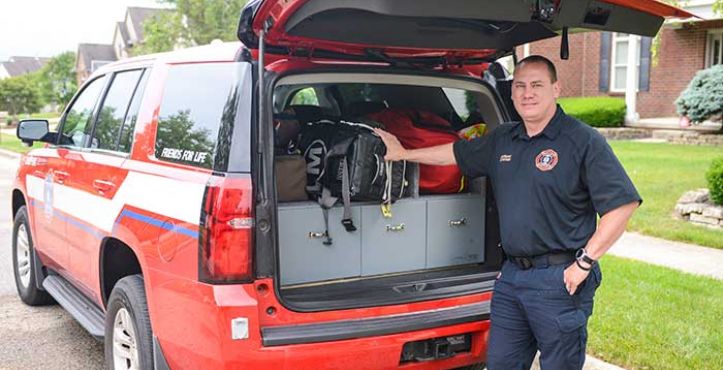
  • EMS Homecare Addresses the Opioid Crisis

    Ohio’s Project FORT helps ensure patients receive needed treatment and support
    Read More →: EMS Homecare Addresses the Opioid Crisis
  • Latest Home Health News

  • Medtrade Changes Bring Better Focus

    Streamlined show planning brings attendees more educational opportunities
    Read More →: Medtrade Changes Bring Better Focus
  • Blessing in Disguise

    Opportunities for the competitive bid contract “loser”
    Read More →: Blessing in Disguise
  • Virtual Dementia Tour Promotes Understanding of Alzheimer’s

    It’s impossible to know exactly what it feels like to have Alzheimer’s, but the Virtual Dementia Tour attempts to recreate the chaotic sense of mental decline.
    Read More →: Virtual Dementia Tour Promotes Understanding of Alzheimer’s
  • Put Me In, Coach, I’m Ready to Play

    Mudville never saw anything like this. In 110 towns across the country, cushioned synthetic-turf fields will soon allow children and adults with disabilities to play ball, thanks to the Miracle League, a nonprofit organization devoted to giving every child a chance to play baseball. The organization has taken off like a pop fly since its inception in 1997. It began in Conyers, Ga., when a Rockdale Youth Baseball Association (RYBA) coach invited a disabled child to play on his team. The Miracle League formed one year later in conjunction with the RYBA and, in 2000, completed construction of a special complex with funds established by the Conyers and Rockdale County Rotary Miracle League Fund. The complex includes a cushioned turf field to prevent injuries and…
    Read More →: Put Me In, Coach, I’m Ready to Play
  • An Overnight Success

    The number of people diagnosed with obstructive sleep apnea continues to rise, making this a lucrative, yet challenging, opportunity for the home medical equipment industry. Patients with OSA, however, are not most providers’ classic customers. Namely, they are not typically Medicare beneficiaries, which means providers must rethink how they market to this population. Likewise, payer sources expect positive outcomes, which means patient compliance is integral to the success of an OSA program. There are certain characteristics that describe the typical OSA patient, such as middle-aged, male and overweight, but research is demonstrating that additional factors also come into play. “Generally, the most affected population is middle-aged males, though postmenopausal women face similar increased incidence,” says Nicholas J. Macmillan, global sleep products manager for Sunrise Medical’s…
    Read More →: An Overnight Success
  • Survey Shows Disabled Go Without Needed Equipment

    Washington Nearly half of the nation’s non-elderly adults with disabilities go without equipment and other items due to cost, according to a recent survey released by the Kaiser Family Foundation. The report, Understanding the Health Care Needs and Experiences of People with Disabilities: Findings from a 2003 Survey, found that people with disabilities who don’t have health insurance face the greatest challenges. Although most adults with disabilities do have some form of insurance, 69 percent of those without health insurance report having no regular doctor, and 67 percent go without needed equipment, such as wheelchairs. Among survey respondents with any type of health insurance, those with Medicare alone — and no supplemental coverage — reported the highest rates of serious cost-related problems. Nearly seven in…
    Read More →: Survey Shows Disabled Go Without Needed Equipment
  • CDC: Home Care Helped Shorten Hospital Stays

    Hyattsville, Md. Americans are spending less time in the hospital than ever before, and the home care industry is part of the reason, according to an April 9 report from the National Center for Health Statistics, a division of the U.S. Centers for Disease Control and Prevention. The average length of hospital stay for all ages declined steadily between 1970 and 2001, from 7.8 days to 4.9 days, according to the report, titled “2001 National Hospital Discharge Survey.” Among Americans age 65 and older, however, the decline was much more drastic — from 12.6 days in 1970 to fewer than six days in 2001. One reason for the decline was “greater development and coverage of post-acute care alternatives to hospitalization” — alternatives such as home…
    Read More →: CDC: Home Care Helped Shorten Hospital Stays
  • Must-See TV

    Seen any good television shows lately? If you can look past the current spate of quasi-reality shows that seem to dominate the small screen, you may be surprised at what you’ll find — especially as it relates to your customers. The “reality” for the people you serve day in and day out is the need for some type of medical equipment. In recent years, your customers’ peers have been showing up frequently on well respected, long-running TV programs — and not just to keep the laugh track rolling. On NBC’s “Ed,” two characters have physical disabilities. “Eli” is a paraplegic bowling alley manager, and “Mark” is an obese high school student. An actor who is disabled portrays each character. Darryl “Chill” Mitchell, who plays Eli,…
    Read More →: Must-See TV

OUR DIGITAL PARTNERS

trending

From Our Partners