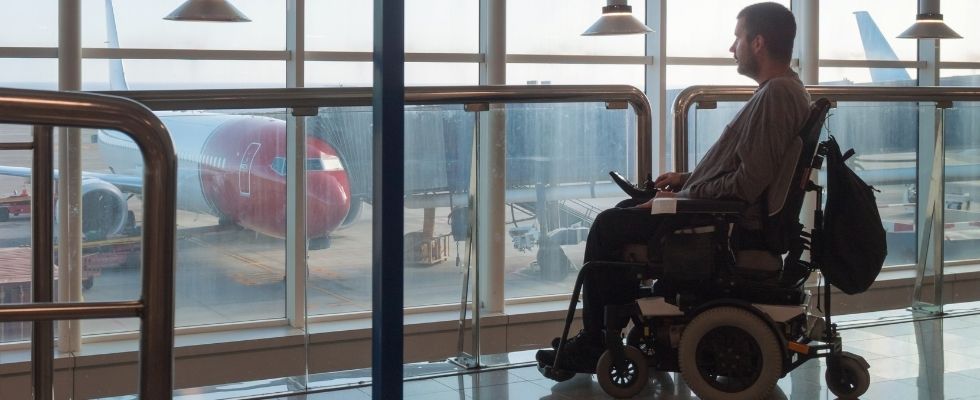
Federal Airline Wheelchair Training Rule Is a Milestone, Not a Finish Line
The Department of Transportation’s training deadline is real and enforceable, but several of the rule’s accountability mechanisms are in limbo
For decades, wheelchair users have approached air travel with a familiar dread: Will my chair come back in one piece? Will I be lifted and carried with dignity, or manhandled by staff who have never been trained to do this safely? On June 17, 2026, a new federal training deadline finally began to answer those questions, and it’s worth pausing to understand what changed, what didn’t and what still needs to happen.
The U.S. Department of Transportation’s (DOT) final rule, “Ensuring Safe Accommodations for Air Travelers with Disabilities Using Wheelchairs,” was issued in December 2024 and became effective in stages. Its centerpiece training requirement reached full effect this June: airline personnel and contractors who physically assist passengers with disabilities, or who load, unload and handle wheelchairs and scooters, must now complete hands-on training with a competency assessment—not a video and a quiz, but demonstrated proficiency in the actual mechanics of transferring a passenger and stowing a power chair without damaging its joystick, footrests or batteries.
That distinction matters more than it might seem. For years, the industry standard for “training” was often a slideshow. The new rule requires airlines to prove their ramp agents and gate staff can execute an aisle-chair transfer correctly, recognize the difference between a manual and power wheelchair’s tie-down points and handle batteries according to hazardous-materials protocol. Employees hired after June 17, 2026, must complete this training before they ever touch a passenger’s equipment, and every employee must be retrained at least annually.
This is a meaningful step forward. The DOT has estimated that airlines mishandle roughly one wheelchair or scooter for every hundred transported on domestic flights—a rate that, multiplied across the volume of U.S. air travel, translates into tens of thousands of damaged or destroyed mobility devices each year. For someone who uses a power wheelchair as their primary means of independence, a damaged chair is not an inconvenience; it can mean being stranded, injured or confined to a hospital bed until a replacement or repair can be arranged. The training mandate is the DOT’s clearest acknowledgment that safe handling is a skill, not a courtesy.
“Airlines mishandle roughly one wheelchair or scooter for every hundred transported on domestic flights—a rate that, multiplied across the volume of U.S. air travel, translates into tens of thousands of damaged or destroyed mobility devices each year.”
The Fight isn’t Over
But readers in the home medical equipment industry should understand that this rule is not fully settled. In September 2025, the Department delayed enforcement of four other provisions: the presumption that airlines mishandled a wheelchair if it isn’t returned in its original condition, the frequency of refresher training, pre-departure notification requirements and fare-difference reimbursements while it undertakes a new rulemaking, informally dubbed “Wheelchair Rule II.” That enforcement discretion currently runs through the end of 2026, with a proposed rule expected later this year.
In other words, the training deadline that took effect in June is real and enforceable today, but several of the rule’s accountability mechanisms are, for now, in limbo. Suppliers, clinicians and advocates should watch this second rulemaking closely, because it will determine whether airlines face real consequences when equipment is damaged despite better training.
For those of us who manufacture and sell mobility products, this moment calls for more than watching from the sidelines. Airlines cannot train their way around basic engineering realities: some wheelchairs are simply easier to transport safely than others, and manufacturers have a role to play in designing chairs with clearer, more accessible tie-down points, more protected control panels and better documentation for ground crews handling an unfamiliar model for the first time. We should be working directly with airlines and ground-handling contractors to make our own transport and handling instructions part of the training curriculum, not an afterthought discovered at the gate.
We also owe our customers honest guidance. Wheelchair users flying for the first time, or flying with a new chair, deserve practical advice: photographing their equipment before check-in, labeling battery types clearly, requesting a supplier’s transport instructions to hand to gate staff and knowing their rights when equipment is damaged. Retailers and providers who fit these chairs are often the last people a traveler talks to before a flight, and that conversation should include this preparation, not just the equipment sale.
“We should be working directly with airlines and ground-handling contractors to make our own transport & handling instructions part of the training curriculum, not an afterthought discovered at the gate.”
The June 2026 training deadline is a genuine milestone, not a finish line. It sets a real floor for how airline personnel must handle wheelchairs and the people who depend on them, but the rule’s remaining teeth are still being negotiated in Washington. Our industry should use this moment to press for a strong, unambiguous Wheelchair Rule II, while doing our own part in product design, documentation and customer education to make safe, dignified air travel less dependent on which airline, which airport, or which day a passenger happens to fly.
OUR DIGITAL PARTNERS